Travel the Scottish Highlands on the Ember bus
You no longer need a car to make the most of your Scotland holiday. Thanks to subsidies from the Scottish government, you can now travel the Scottish Highlands on the Ember bus for as little as £2. The Highlands fare cap is part of a pilot that started in March 2026 and will last until at least March 2027. In this blog, you can read more about the fare cap and the myriad of other reasons to choose Ember for your roadtrip. I used the Ember bus a couple of times in May 2026 and am a big fan now!
Last updated: October 2026
Routes
North and west
Since starting in 2019, Ember has rapidly expanded its network. Currently, there are 2 routes north of Inverness: one to Thurso and one to Ullapool. The latter makes the mountainous areas near Braemore a lot more accessible. From Inverness, 3 routes go south. One crosses the western Highlands down to Fort William and Oban. This route is great for outdoor adventures and onward travel to the Hebrides by ferry. As of October 2026, you can even take an Ember bus to the isle of Skye! Another route follows the train line down through Aviemore, Pitlochry and Perth. This means you can get off the Ember bus all along the western side of Cairngorms National Park.
South and east
Between Aberdeen and Dundee, the route also crosses the Cairngorms. It stops at for example Braemar, which was previously unreachable by public transport. Similarly, there are now 2 routes though Loch Lomond & the Trossachs National Park. One follows the western side of Loch Lomond, the other skirts Loch Earn.
In addition to serving Highland towns and villages, Ember offers plenty of intercity connections. Between Edinburgh and Glasgow, for instance, the Ember bus runs hourly, including through most of the night. Overnight buses are especially useful, as trains don’t operate at night, even between big cities. On top of that, the Ember buses run much more frequently than local trains in rural areas. What’s more, the £2 fare cap has expanded to include Glasgow.
Sustainability
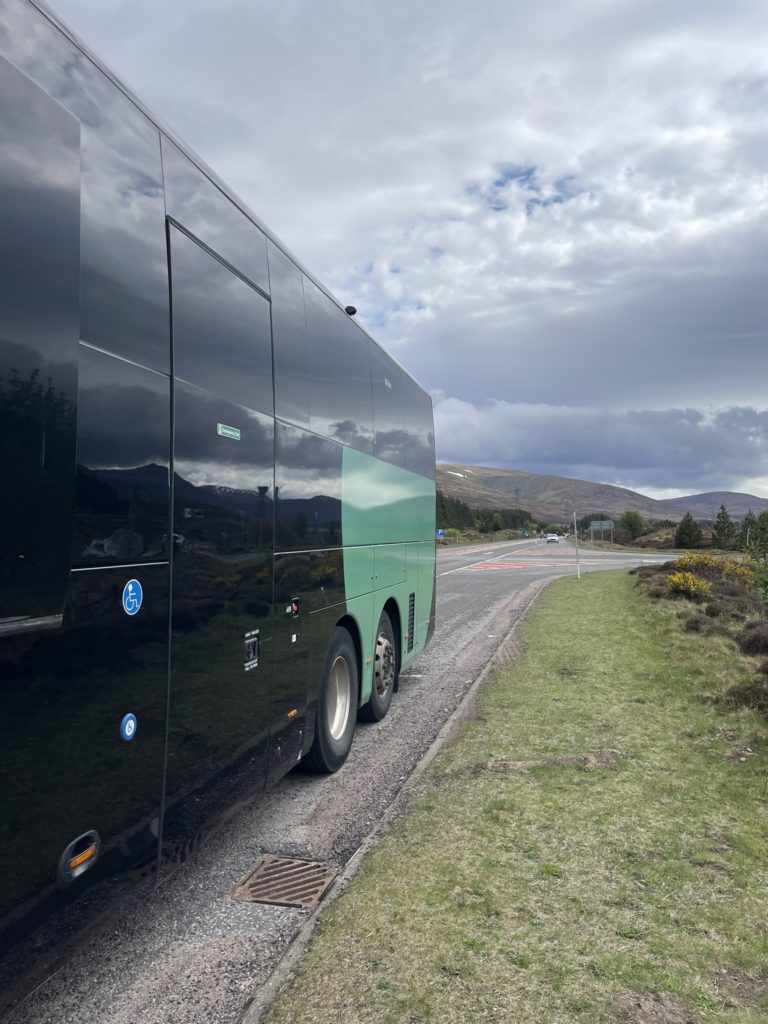
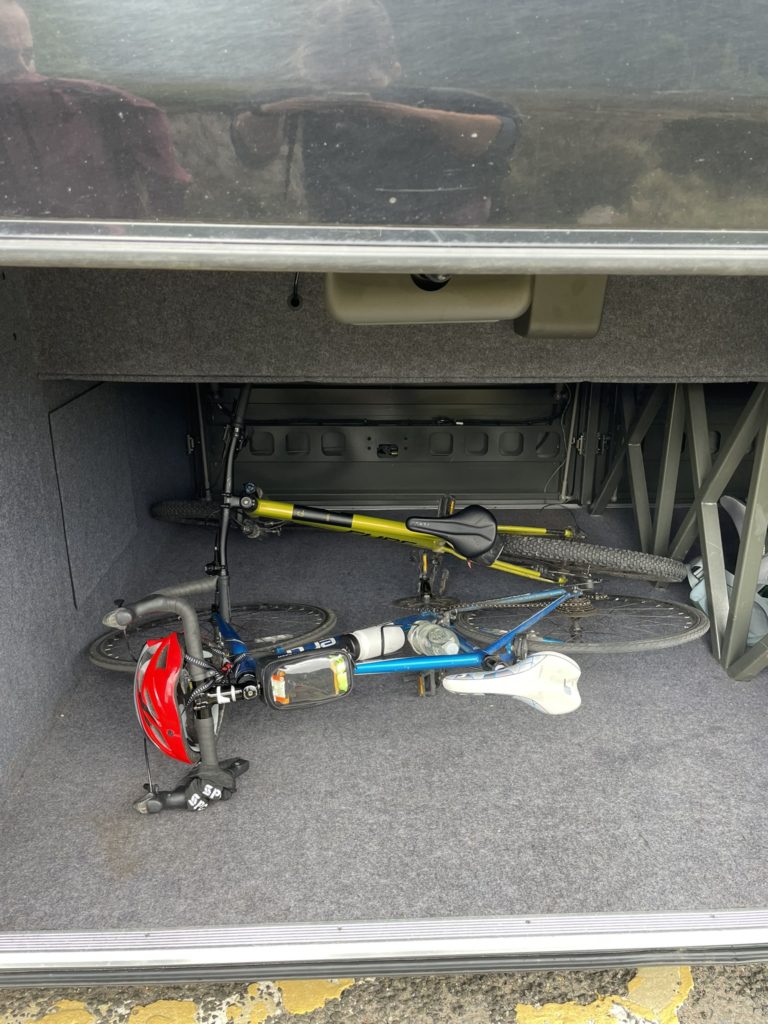
Buses are an efficient and therefore sustainable transport option by default. But Ember takes it to the next level with a fully electric fleet. Aside from causing less polution, the electric engines make the journey more comfortable, too. And, because you may also bring a bike on the Ember bus free of charge, you can now get to virtually everywhere on the Scottish mainland without a car.
By stopping at smaller towns and villages, the Ember network has the potential to replace lots of car journeys. You do need to book a ticket at least 10 minutes in advance to ensure the bus will stop to pick you up or deliver you to your destination. This way, the routes are optimised for efficiency, and buses don’t drive through town centres unnecessarily. Tickets are flexible, though, so you can easily change your destination online before you board.
Pricing
As said above, the Scottish government is subsidising bus journeys through the Highlands, Glasgow and much of the west of Scotland. This means that fares are capped at £2 throughout the area. Unfortunately, if you have a journey that partly passes through one of the included regions, only that part of the journey is eligible for the fare cap. You will then pay £2 plus the regular price for the rest of the route. Even so, taking the Ember bus is still likely to cost you less than a train ticket. And unlike train tickets, tickets for the Ember bus are always exchangeable and fully refundable.
For locals, Scottish bus passes also apply to journeys with Ember. People under 21 and over 60 can therefore travel for free. If you’re not Scottish, children under 5 still travel for free. Older kids and teenagers travel for half price. Dogs are welcome, too. You pay a half price ticket for them if they need their own chair. Otherwise, small dogs can accompany you free of charge.
Amenities
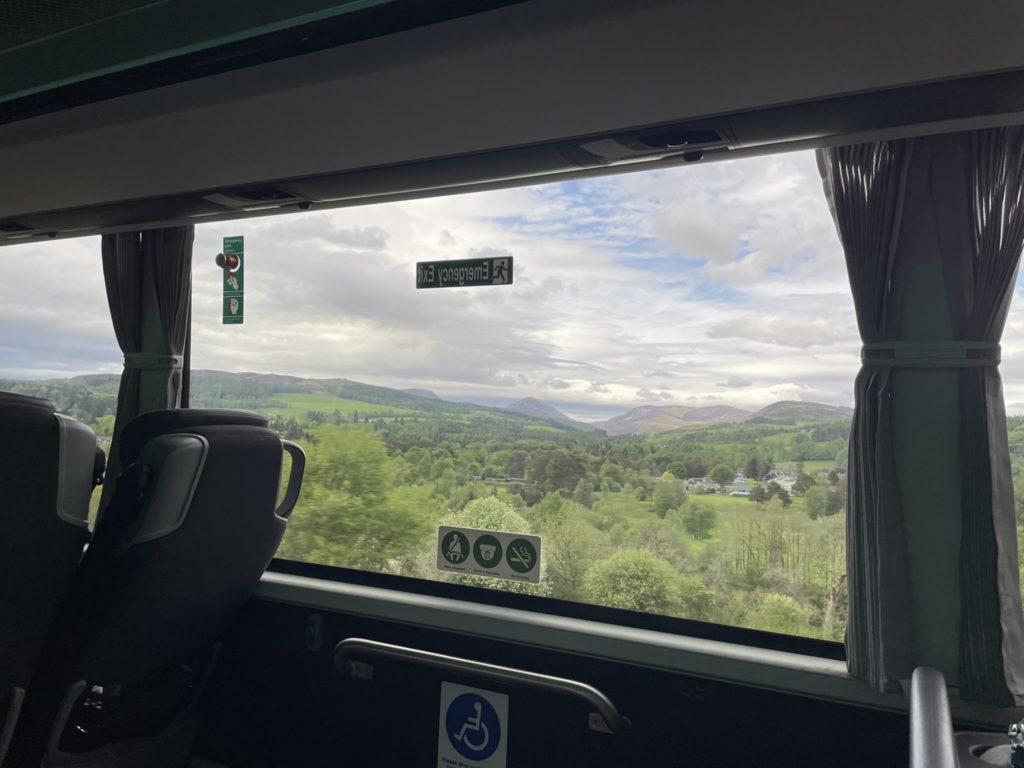
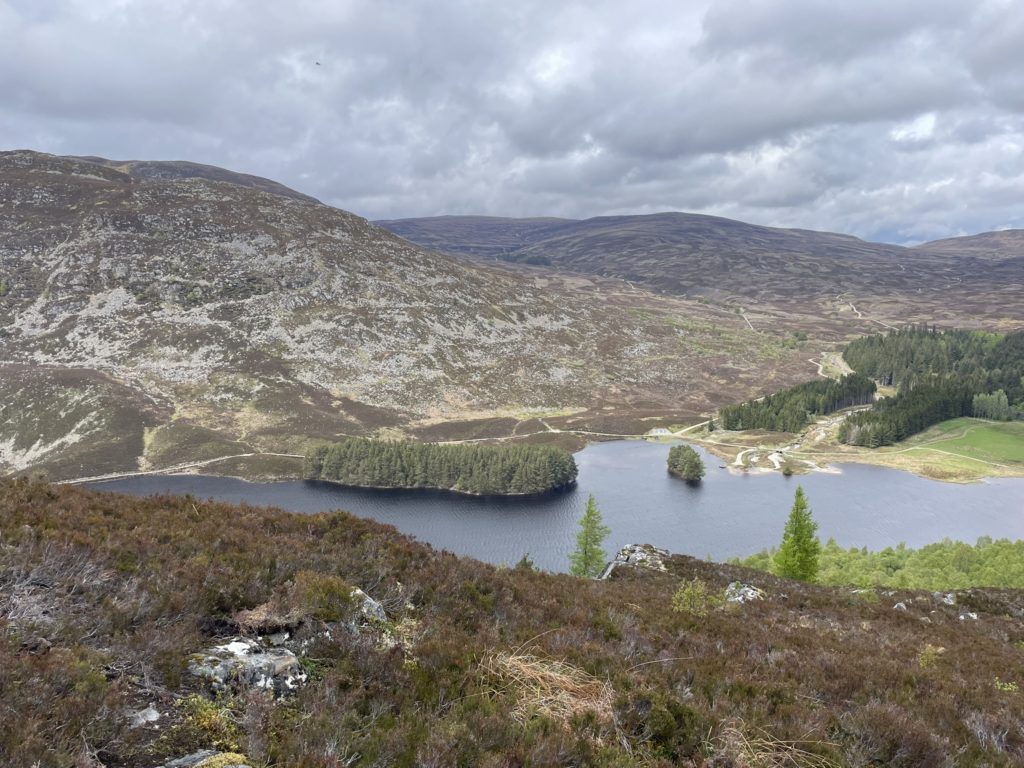
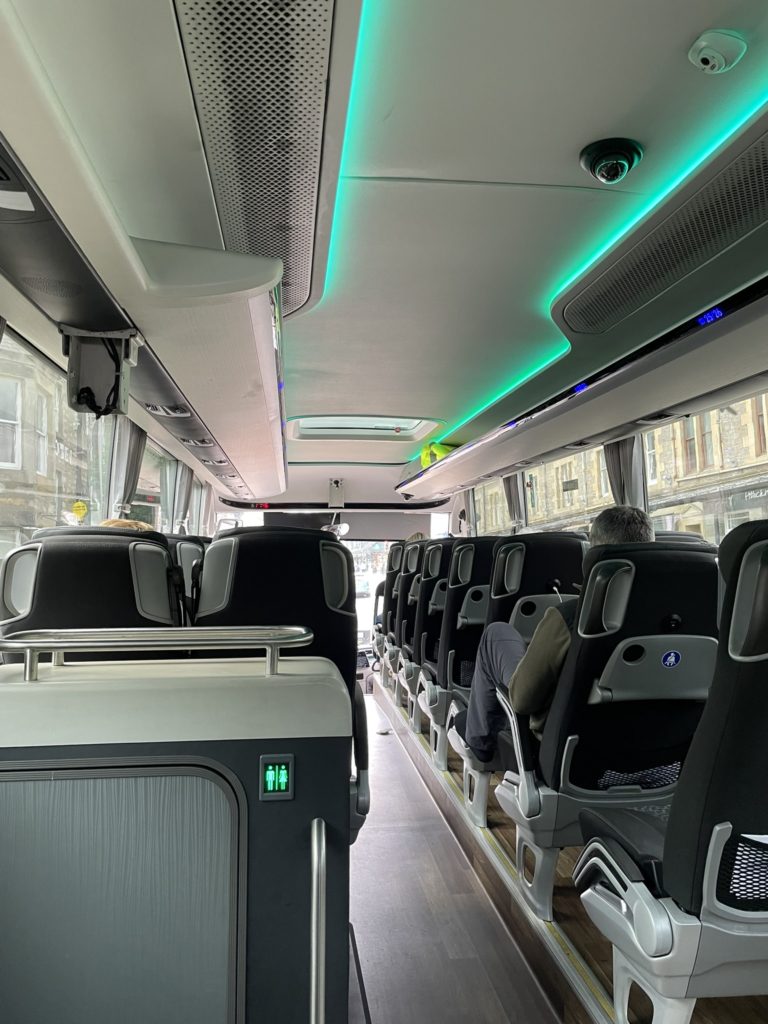
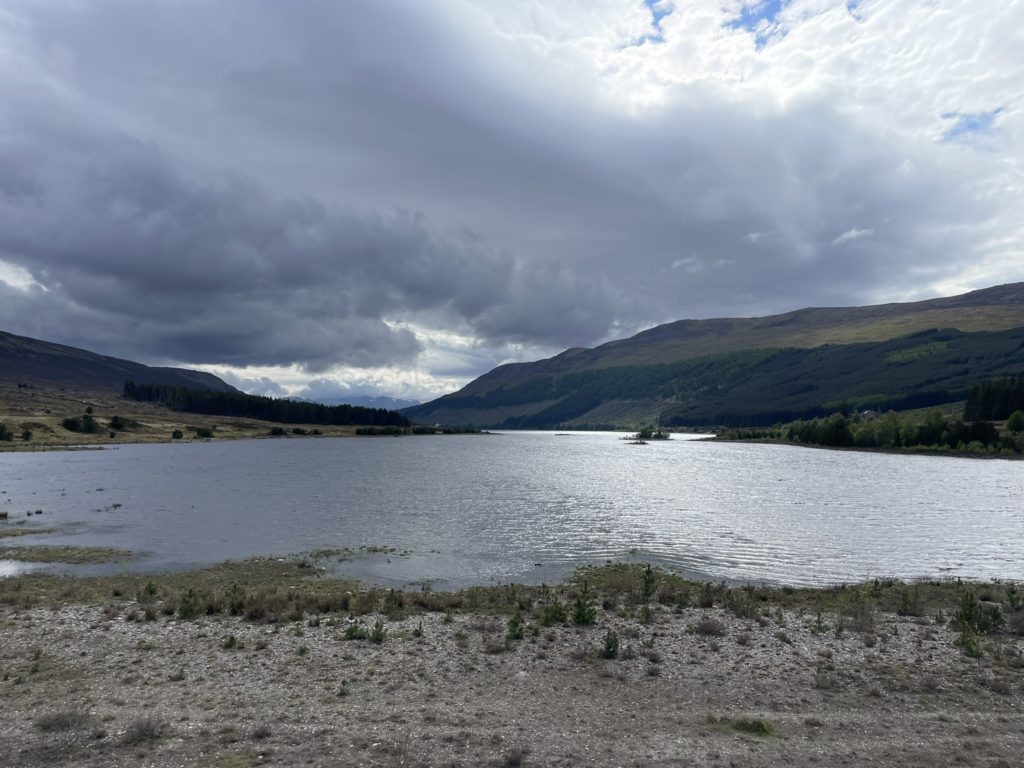
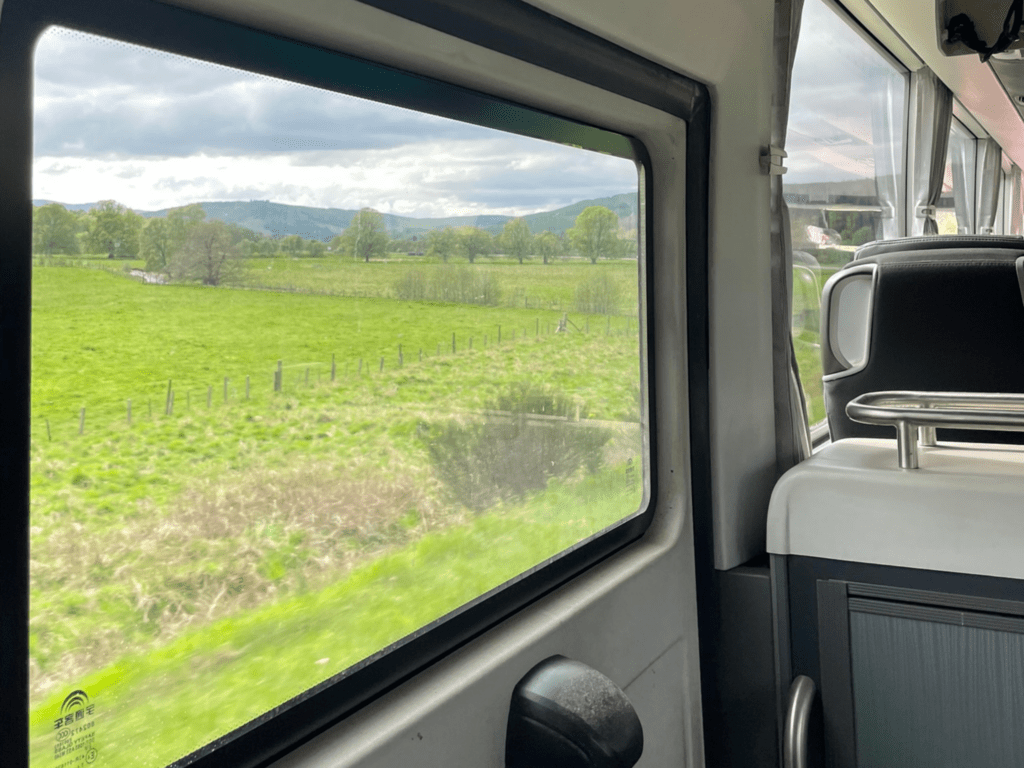
Travelling the Scottish Highlands on the Ember bus is a comfortable experience. The seats are nice, spacious and clean. In terms of accessibility, there is a wheelchair space on each bus. Moreover, there are toilets on almost all of the buses, as well as USB charging ports and WiFi. Another thing I like is the live tracking of the bus. You get SMS updates in case there are delays, but you can view the location of each Ember bus online at all times. But the single best thing about Ember buses must be the views! The large windows seemed like a portal to a fantasy world when I travelled between Pitlochry and Aviemore.
Conclusion
As much as I love trains, the Ember bus is your best friend in the Highlands. Where trains are infrequent or nonexistent, it is great to have another option that is also affordable. Between large cities, Ember can be more expensive, but worth it if there are train cancellations or when you need to travel at odd times. I honestly haven’t found a single downside to the Ember network yet! Hopefully Ember will continue to expand their fleet, because the locals I spoke to are hugely enthusiastic about this next generation bus operator. In combination with regional buses, you can get to pretty much anywhere in Scotland without a car now!
5 Replies to “Travel the Scottish Highlands on the Ember bus”
Can I get from Uig on Skye to Oban by Ember bus or Ember bus and train? I have a dog and cannot use Citylink buses.
Hi Linda, Ember buses only run on the mainland (for now), so sadly you cannot take it directly from Uig to Oban.
Hi that is changing- Ember are starting Portree to Inverness from 07/10/2026. Excellent news. No doubt will expand hopefully. Ember are incredible for journeys over the Highlands now- couldn’t rate them highly enough. Duncan (Inverness, regular Ember user)
Oh, that’s fantastic! Thank you for the update 🙂