Sustainable destination: Großes Walsertal
I may have a new favourite travel destination that is also exemplary when it comes to sustainability: Großes Walsertal. Because this region mostly gets domestic tourists, it’s not strange if you haven’t heard of it before. Großes Walsertal is a valley with surrounding villages in the Austrian state Vorarlberg. It’s a perfect place for outdoor activities, locally produced food and learning more about nature. But before I dive into my recommendations for things to do and places to stay, I’ll explain what makes Großes Walsertal such a sustainable travel destination.
Index
About Großes Walsertal
In the westernmost state of Austria, you will find an Alpine valley with 6 villages. The rougly 3.500 inhabitants live across Fontanella-Faschina, Sonntag-Buchboden, Blons, St. Gerold, Raggal-Marul and Thüringerberg. On average, only 18 people inhabit each square kilometer! Großes Walsertal is surprisingly accessible for a rural area, though. It has modern infrastructure, so don’t worry about getting stuck on muddy gravel roads or finding a supermarket nearby. Winter can be a different story due to occasional heavy snowfall, but most of the time Großes Walsertal is easy to reach and has all the facilities you need.
Tourism
Tourism goes back a long way in Großes Walsertal. To help local people out of poverty, the region decided in the 1970s to put a stronger focus on tourism as a source of income. The other option would have been to attract industry that would taint the landscape. The villages therefore invested in building ski lifts and cable cars as tourist attractions (albeit on a smaller scale than other, larger skiing destinations). And with success! The region has found a good balance between attracting visitors whilst keeping overtourism at bay. Summer is now popular for hiking and cycling, whilst winter is skiing season. As said, that doesn’t mean that the villages become overrun with tourists, though. Despite marketing itself as a year-round tourist destination, the calm and quaint village atmosphere remains. No busloads of daytrippers here! I had the pleasure of visiting in late September, so it was relatively quiet, the weather was still lovely, and the trees were slowly starting to show their autumn colours.
Sustainability
One of the main things that makes Großes Walsertal a sustainable destination is the fact that it is a UNESCO Biosphere Reserve. To gain and maintain the accreditation, inhabitants run projects that boost the local economy while preserving nature. A Biospere Reserve must also have at least 5% protected land where ecosystems can thrive without human interference. Großes Walsertal easily surpasses this requirement with 18% of its area entirely dedicated to biodiversity conservation.
On top of nature conservation, Großes Walsertal is an energy export region. It produces more renewable energy than it needs locally, so the rest of Austria benefits from the hydropower and solar energy generated here. Hydropower projects can have a big impact on ecosystems, which is why it’s nice that the plants in Großes Walsertal are generally small-scale. Another way energy is generated here is by using trees that have to be felled to preserve the landscape for biomass (or furniture-making).
Unlike in places were tourism does more harm then good, tourists are part of the sustainability aims of Großes Walsertal. Firstly, tourism helps create jobs, so people who would like to live in the area can find employment. Secondly, locals can sell their regionally made products to tourists, providing another form of income. But most importantly, through educational experiences, tourism helps spread the word about successful nature conservation. This does mean that the region aims to attract sustainability-minded travellers like you (as you are reading this blog!) rather than people focused on ticking places off a checklist. In other words, Großes Walsertal is a great place for slow tourism, where you are encouraged to enjoy the surroundings and take it easy.
Transport
Getting to Großes Walsertal
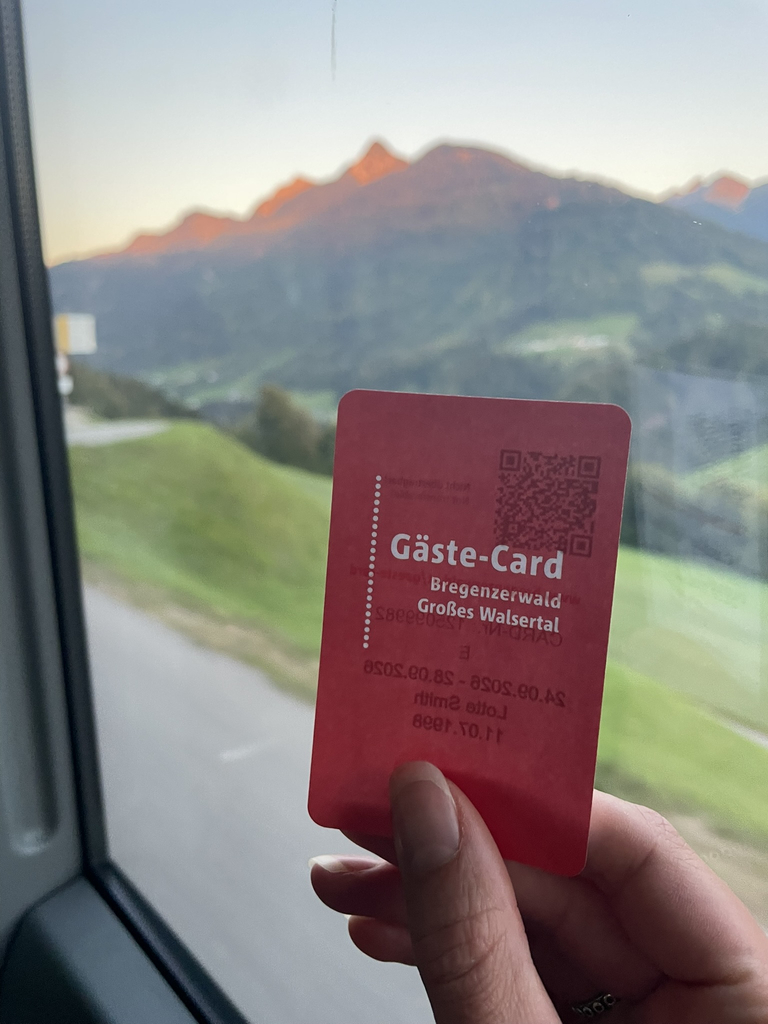
To get to Großes Walsertal, the nearest train stations are Bludenz, Nenzing and Feldkirch. Bludenz and Feldkirch have good connections to both Zürich and Wien. I travelled to and from Bludenz, from where you can continue by bus. After changing in Thüringen, there are buses to all of the 6 villages in Großes Walsertal. When you stay 3 or more nights within the Biosphere Reserve during summer, you receive a (digital) guest card that gives you free bus and train travel throuhgout Vorarlberg for the duration of your stay. This is a big step in promoting sustainable transport throughout Großes Walsertal. The guest card even includes arriving with free train travel after crossing the border with Switzerland at St. Margrethen, Germany at Lindau or Liechtenstein at Nendeln. For me, this meant my train ticket was free from St. Margrethen onwards when I entered Vorarlberg via Switzerland.
Getting around the valley
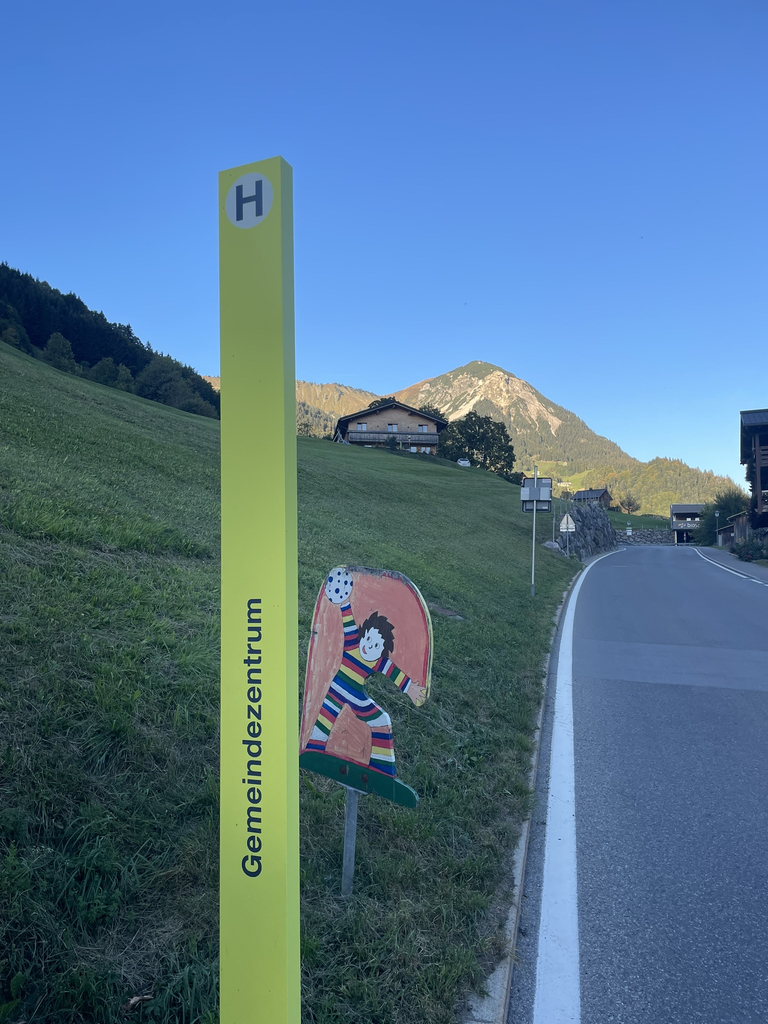
I was quite impressed by the frequency and reliability of the buses in Großes Walsertal. There are 2 main bus lines that go around either side of the valley. The 570 passes through Blons, St. Gerold and Thüringerberg, whilst the 575 connects to Raggal-Marul. The bus lines merge at the top of the valley and both stop in Sonntag-Buchboden and Fontanella-Faschina. Bus stops are clearly indicated by a yellow pole, and most have a digital screen with live timings.
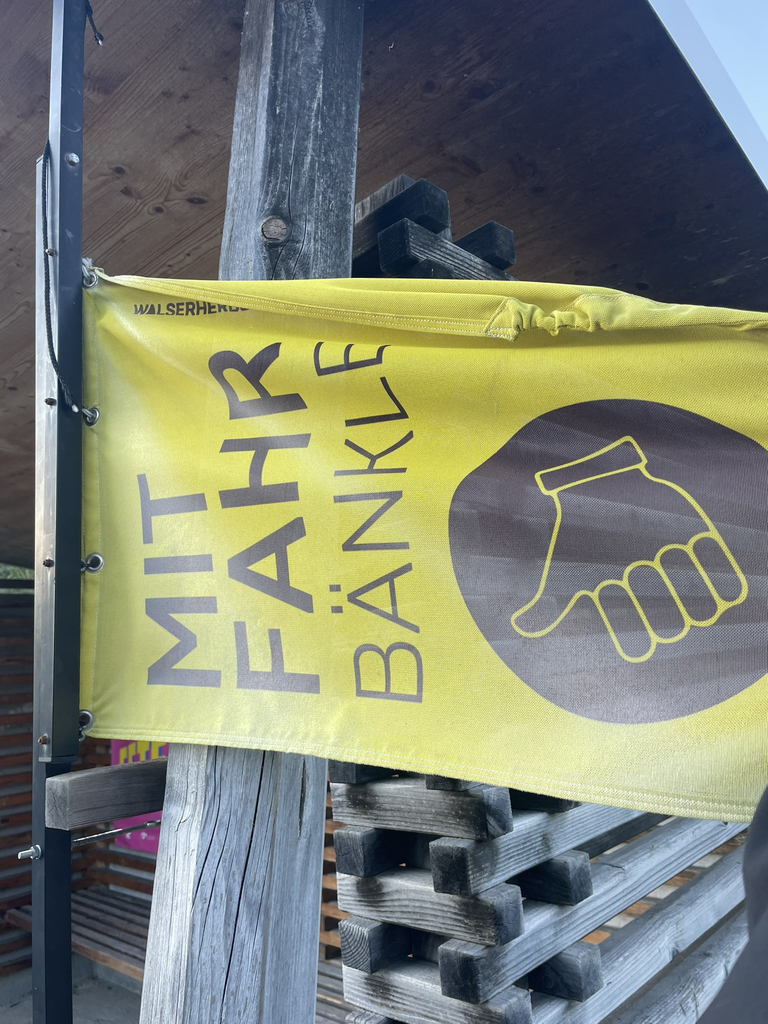
Of course you can walk or cycle between villages, but due to the elevation this can be a challenge in one direction! As an alternative, hitchhiking is a good option. Several bus stops have a yellow flag you can raise to indicate you would like a lift. Because I was tuned into the bus schedule, I didn’t end up using this myself, but I did see another woman raising the flag and putting her arm out to hitch a ride.
Activities
Foraging walks
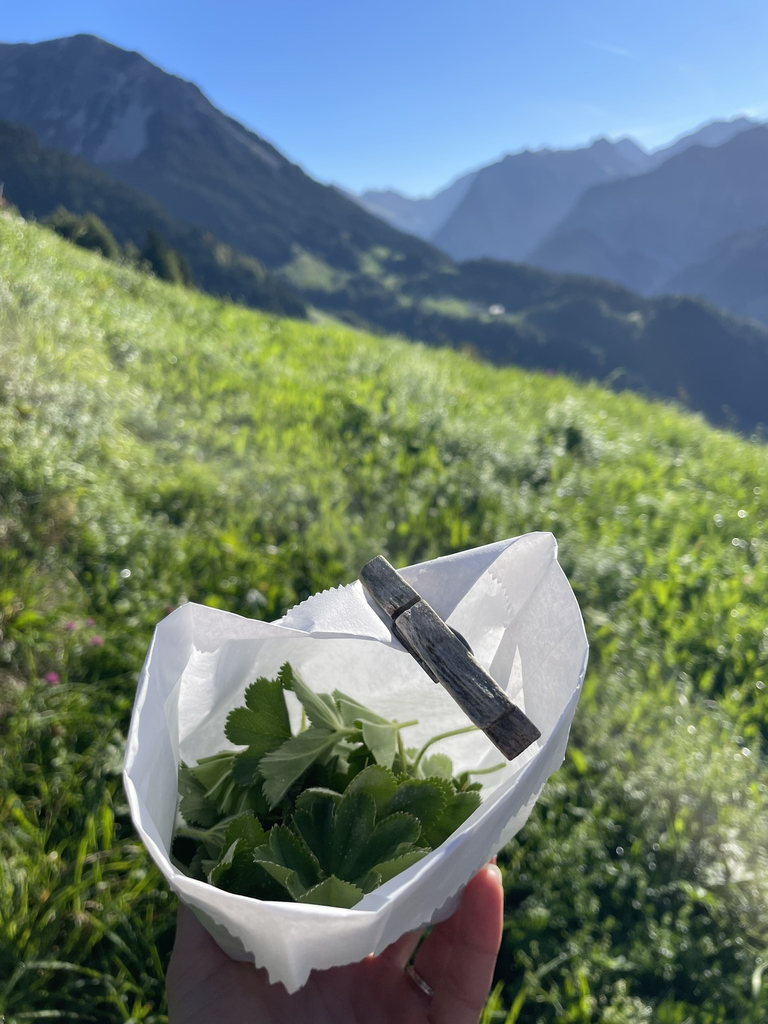
One fun activity is to join walks where you forage seasonal herbs for cooking or making tea. I had the pleasure of meeting Elisabeth for a morning stroll to gather tea herbs. Elisabeth is part of group of local women running the ‘Bergtee’ (Mountain Tea) project. As part of this, they share and pass down knowledge about the regional plants they use to make tea, as well as how to live in harmony with nature in general.
I learned that the women never pluck the first flowers of the season, so these can provide food for pollinators and grow into berries. They also base their teas on whichever plants are available that year, rather than making the same mixes every time. All of the teas they sell are the same price, regardless of the ingredients, as no one herb is ‘worth’ more than another. In fact, money-making is far from the primary goal of Bergtee. Instead, the foraging walk shows that if we share ingredients with one another and only take as much was we need, there is enough for everyone. A great philosophy for life in general! I’m taking a lot of inspiration and knowledge back home with me, plus of course the tea mix we foraged.
Museum Großes Walsertal
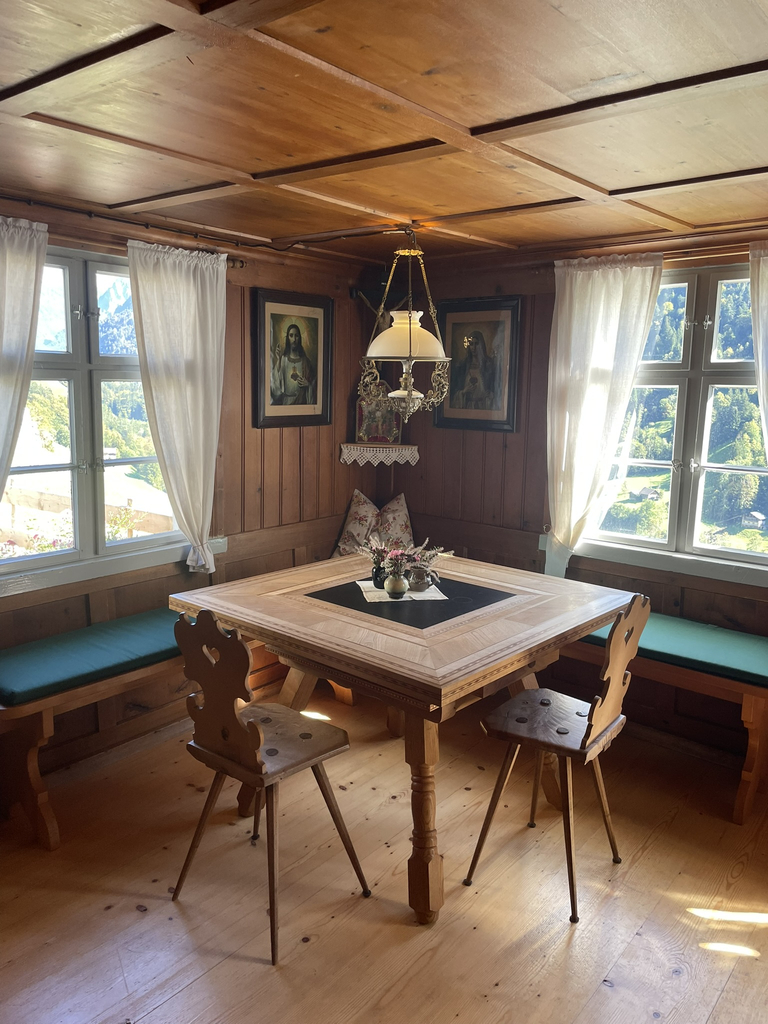
There is a museum in Sonntag you really should visit when in the area. The main theme of the museum is life in a rural valley, including the dangers of extreme weather and mountain erosion. The museum is carefully curated with interesting artefacts, about which the guides are happy to tell you more. Even the building itself is noteworthy due to its many functions and extensions through the centuries.
My visit was well-timed, as the temporary exhibition this year revolves around tourism. I read about spring water attracting travellers as to Großes Walsertal as early as 1460, and the first Alpine hut being built in 1863. Videos tell about local residents’ first meetings with tourists. Some of them grew up in a guesthouse, so tourism has always been a part of their life.
The museum is family-friendly, with plenty of thought-provoking activites for kids. If you enjoy reading, you can spend hours going through all the information packed into this monumental building. Otherwise, there are summarised descriptions of each room and lots of things to take in visually, as well.
Cable cars
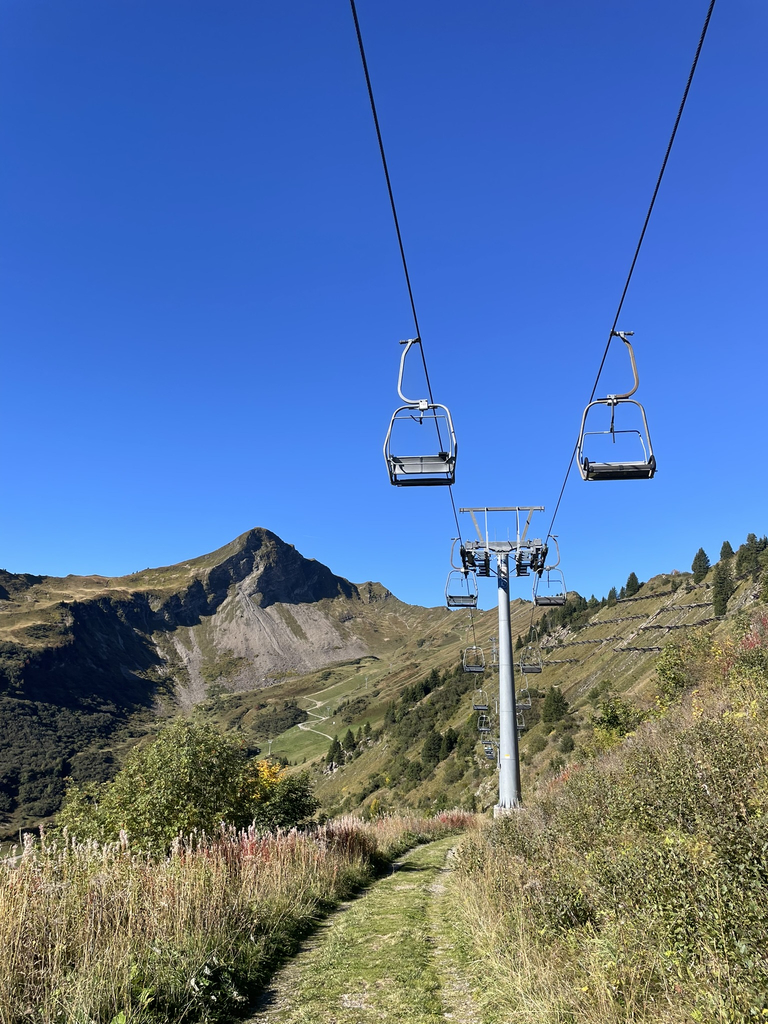
From Faschina, I look a cable car halfway up the mountain for a hike. Whether you get off at the top or at the ‘Mittelstation’ like I did, there are routes of various levels of difficulty. Taking the cable car in itself is a fun experience and not as terrifying as I though it might be! The views were great on both the way up and down.
To get across the valley, there is also a cable car at Sonntag-Stein. This one is ideal for hiking up Wandfluh, Glattmar or even Breithorn. If you are afraid of heights, you might one to give it a pass, but otherwise it’s an incredible few minutes as you glide high above Großes Walsertal. Both of the cable cars in the valley are free with the guest card, which is yet another reason to embrace slow travel and stay at least 3 nights in the region.
Scenic swings
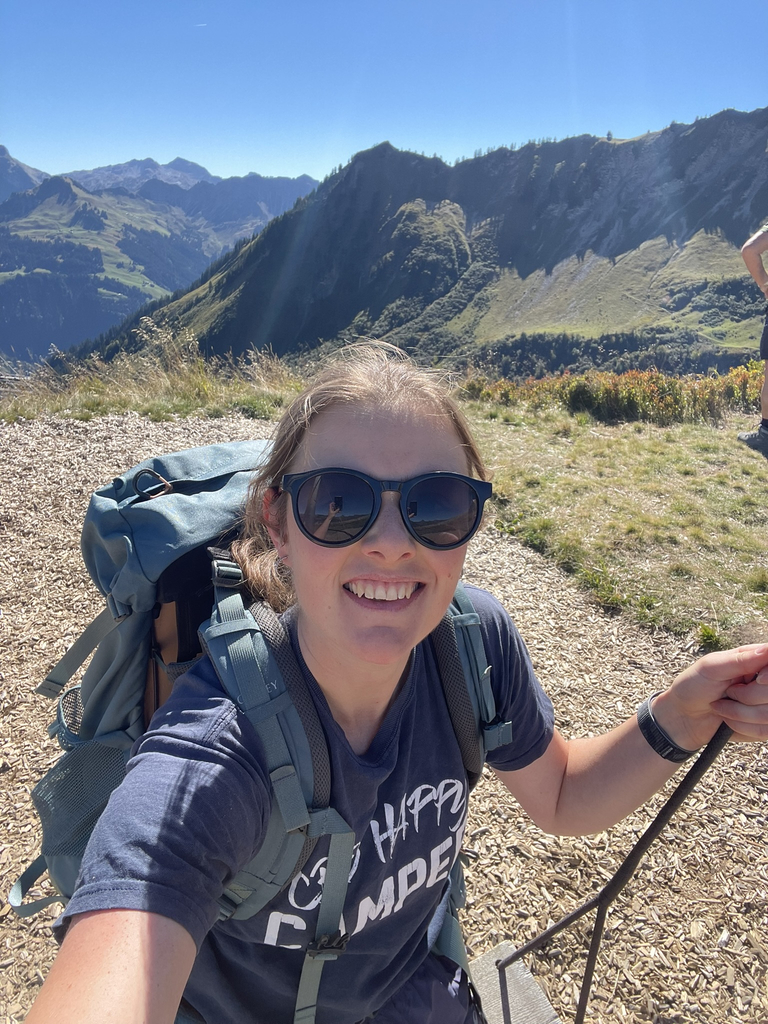
There are two large swings in Großes Walsertal. One of them you will find next to the ‘Mittelstation’ of the cable car above Faschina, at Hahnenkopf. As you can see on the photo, it’s a great place to enjoy the views after a hike. You can see many mountains, including the nearby Glatthorn.
The other swing is located above the Seewaldsee. It overlooks the lake near Fontanella-Säge. From this swing, you can see far down the valley. In terms of safety, you will not be dangling above a ridge, so there is nothing to worry about. Even if you’re not keen to be on a swing, both locations are still worth getting to. The views from the mountain plateaus are simply fantastic. You can combine a visit to both swings by doing this hike.
Biospärenpark.haus
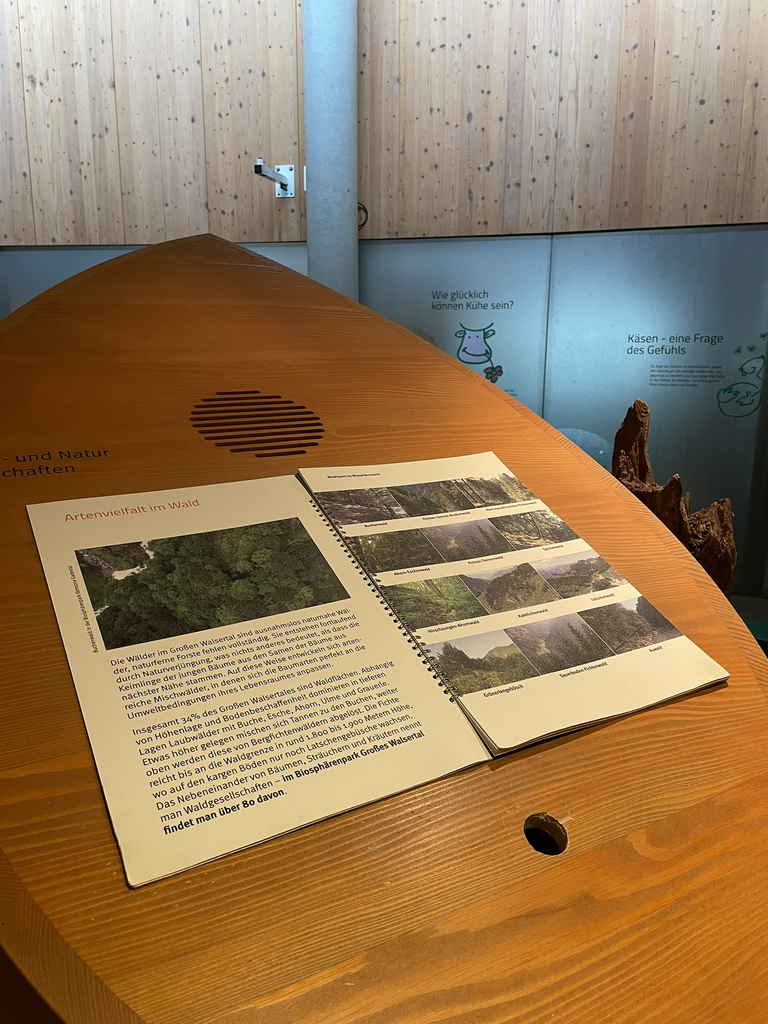
If you want to know more about what makes Großes Walsertal a sustainable destination, the Biospärenpark.haus in Sonntag is where you need to go. It explains the different zones that make up a UNESCO Biosphere Reserve. As well as that, you gain insight in how Großes Walsertal became a Biosphere Reserve and what the plans are for the future. I gained a much better understanding of the ecology of the area, and how people live off the land in a sustainable way.
Just like in the museum, there are playful elements for children, who are guided around the exhibition by a marmot. Downstairs is an artisan cheese factory, and you can observe the cheesemaking process through a glass wall. Upstairs is a small library of books about Großes Walsertal, in addition to a gift shop with locally crafted products. I got myself some more tea and nettle salt.
Friday Flea Market
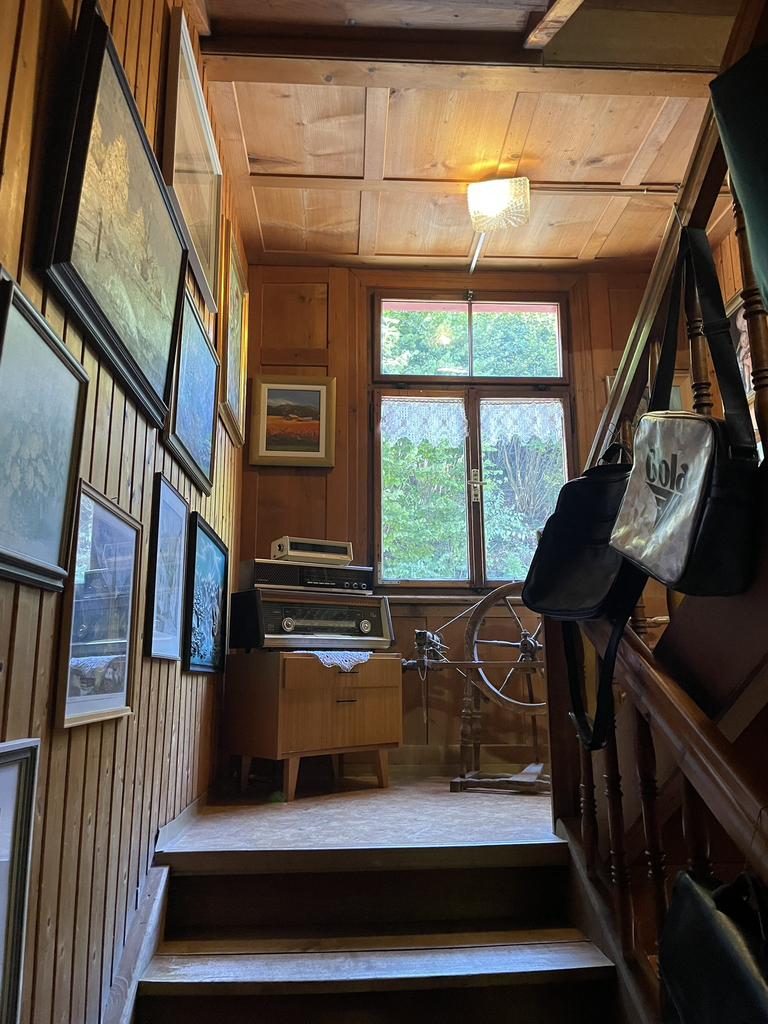
On Friday afternoons between April and October, the Gemsle Flohmarktlädele is the place to be. This indoor flea market attracts locals from across the region, making the repurposed guesthouse more like a community centre. You can buy coffee and cake on a pay-what-you-can basis. When I visited, the small bar room was full of people singing along to music played on the accordion, harmonica and gitar. There is some outdoor seating, too.
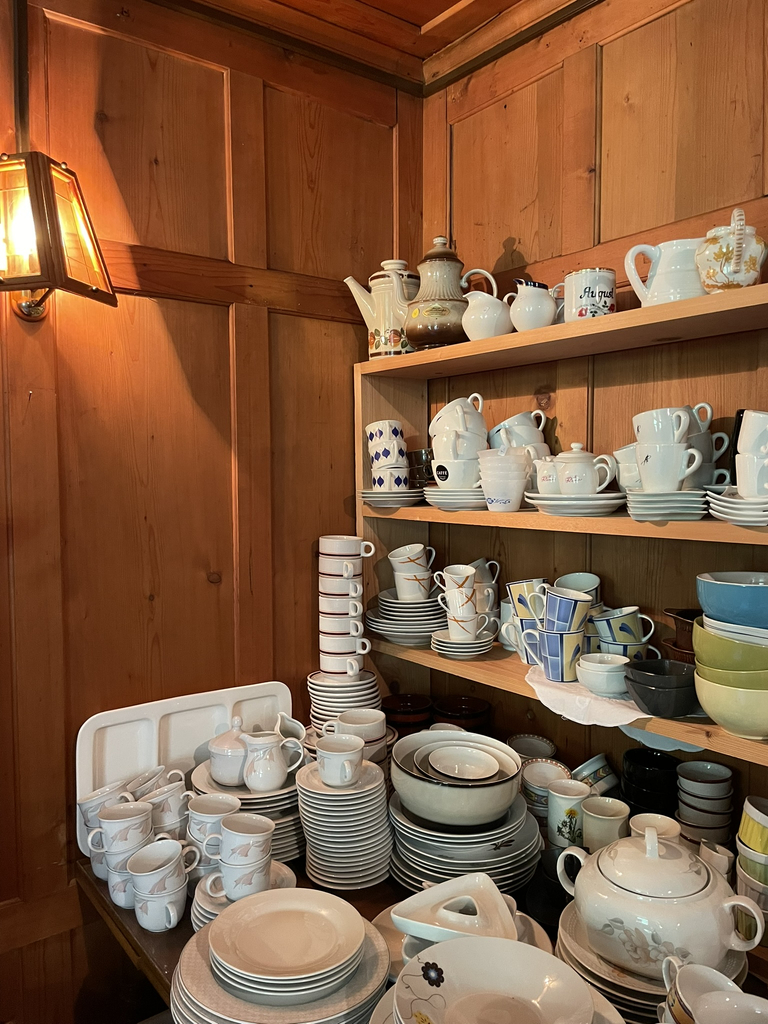
People reguarly donate items to the flea market, which get allocated to the appropriately themed room and can then be bought by anyone. All income from the flea market and bar are used to fund projects in the valley. A great example of yet another sustainable initiative in Großes Walsertal! The items get a second life, while the donations feed back into the community. For sale are books, crockery, art, clothing and anything else imaginable. I especially liked the hand-knitted socks and small bags made from scraps of textile. Another cool item that definitely would not fit in my backpack were old cow bells.
Sabine + Xaver organic cookies
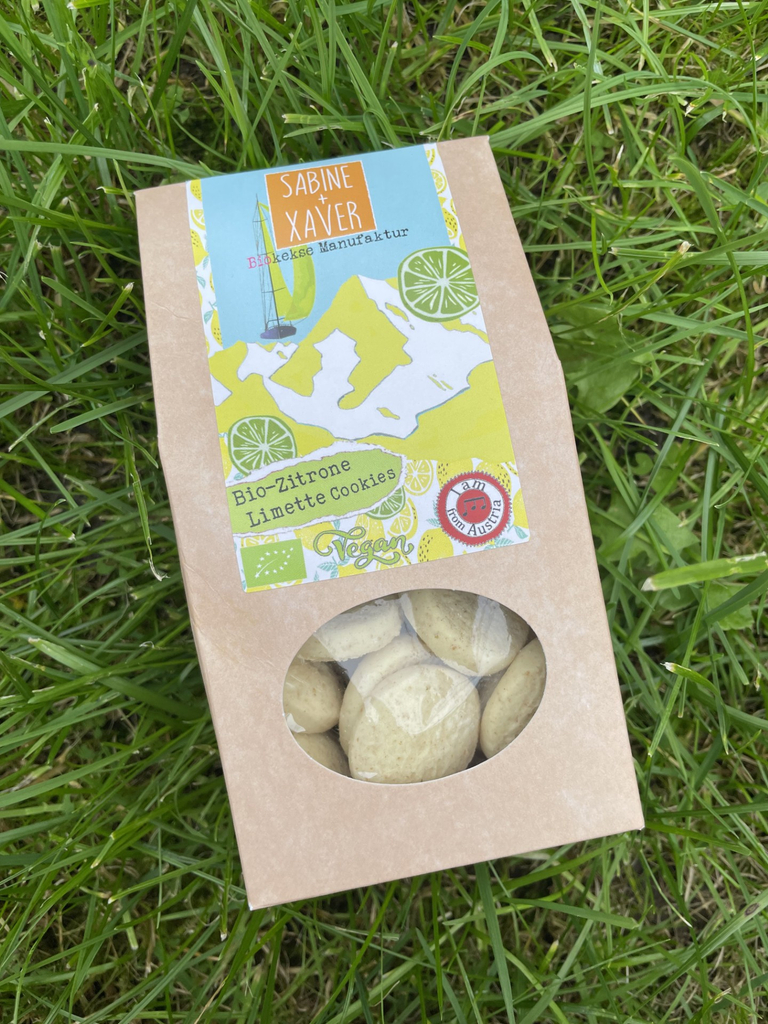
To see how one of the tastiest local products is made, you can book at tour (with tasting!) around a cookie factory. Sabine + Xavier cookies are made with locally sourced, fully organic ingredients. On top of that, there are several vegan flavours. I couldn’t resist bringing home a pack of lemon-lime cookies. And I can tell you: they are delicious.
Rather than signing up for a tour in advance, you can also visit the café at the factory in Raggal for a drink and sweet treat. It makes an ideal stop after a hike in the mountains near the village. Keep an eye on the Sabine + Xaver socials for any events or seasonal flavours.
Hiking
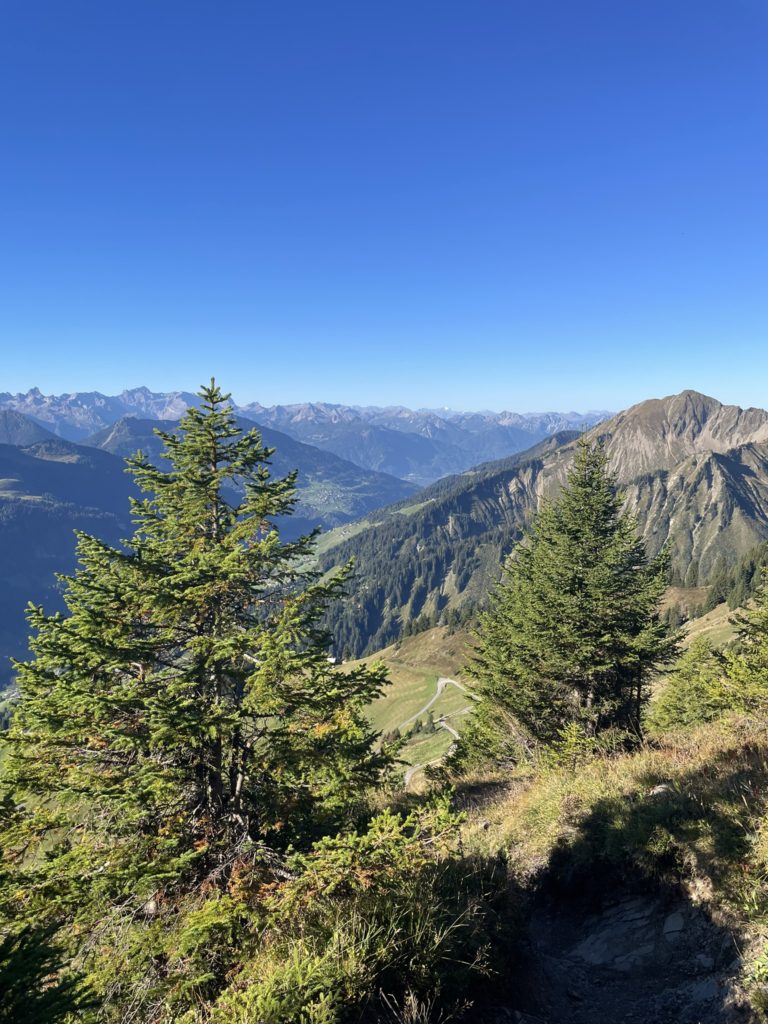
Last but certainly not least is hiking! I already alluded to it above: Großes Walsertal is an ideal destination for hiking enthusiasts. You can find route inspiration on the website of the region, or in local walking guides. Such guides and maps are available at most hotels and tourist attractions.
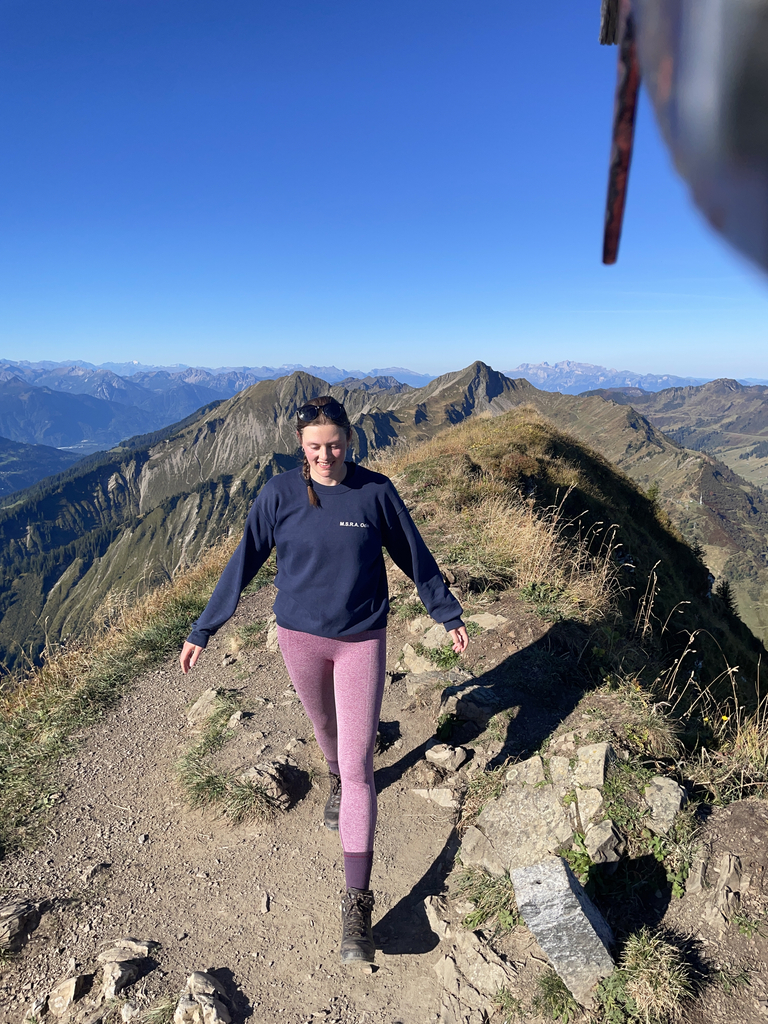
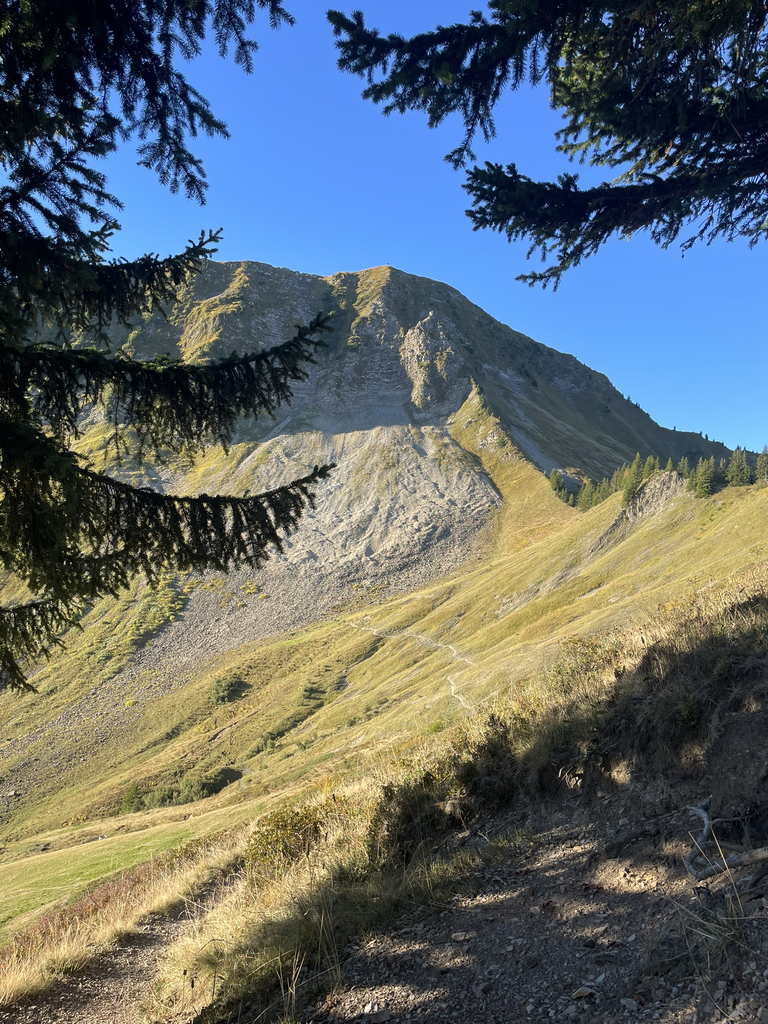
If you’re up for a challenge, you can summit an alpine mountain. I went to the top of Glatthorn, which was a proper workout. It’s a tough hike and certainly not for beginners! When you’re used to difficult terrain, it is absolutely worth the effort. On another day, I did a circular walk up to the peak of Zafernhorn. This route wasn’t quite as technical, but still very rewarding in terms of the views. If you don’t want to go all the way up to the top, walking around it is also incredibly scenic.
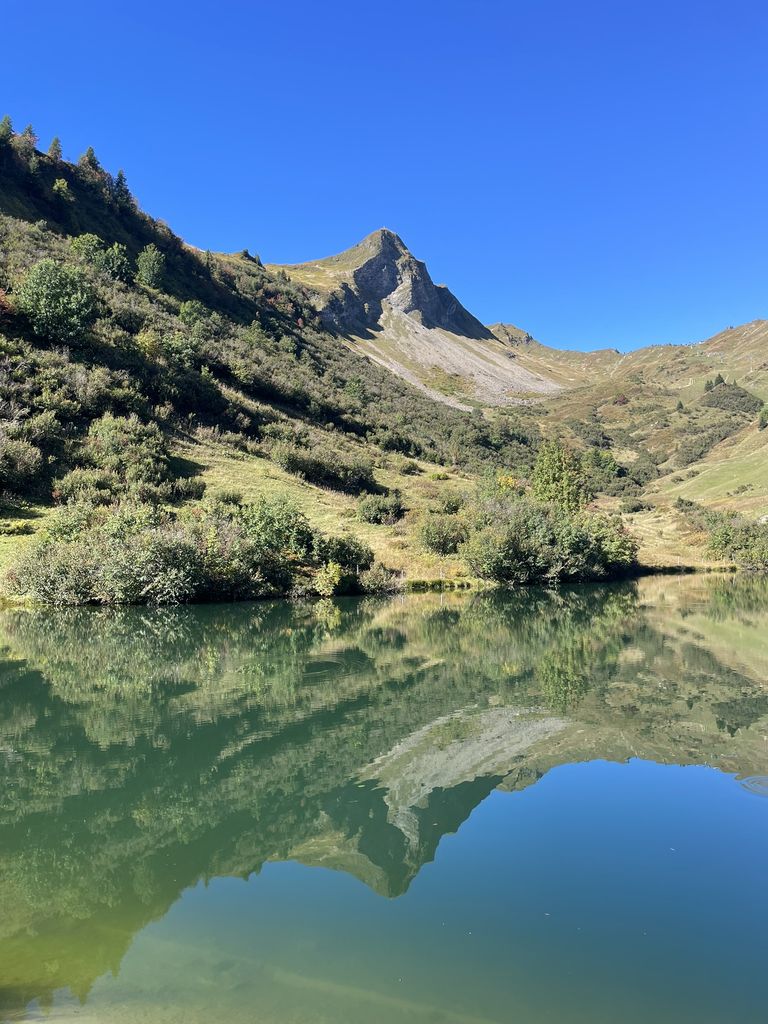
No matter your hiking fitness, there will be suitable routes. Easier options include walks around lakes such as Seewaldsee near Fontanella and Stafelalpsee near Faschina-Säge. Alternatively, you can walk along the river Lutz near the bottom of the valley. There is also a forest discovery trail for families in Marul.
Accommodation
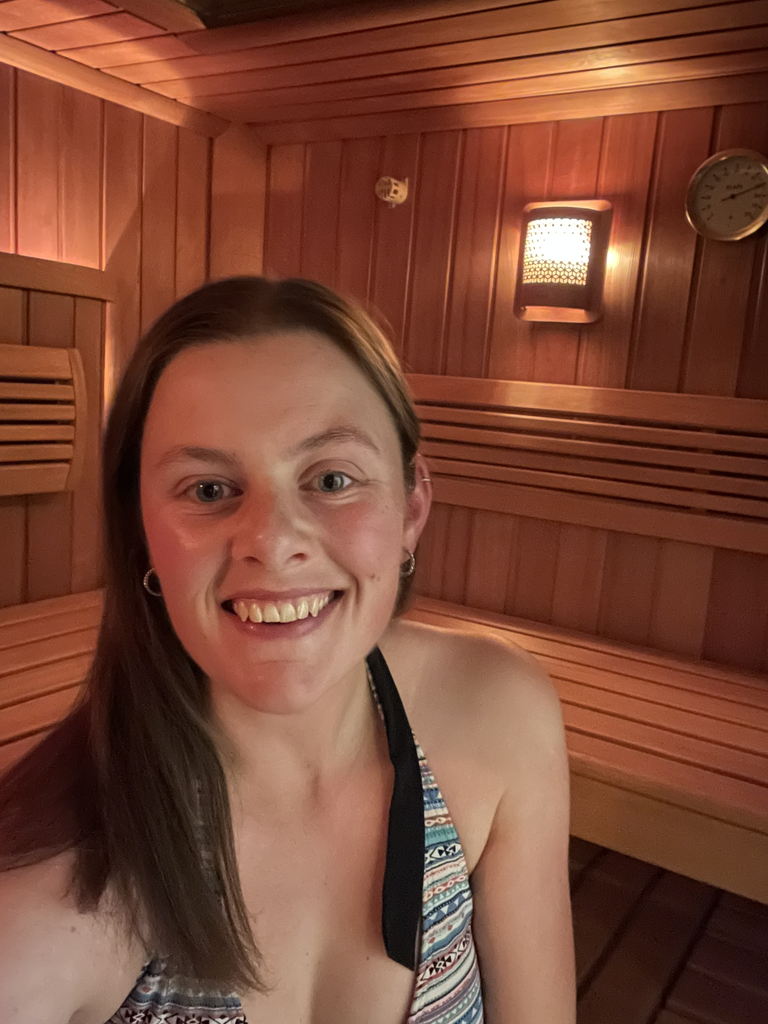
When it comes to accommodation in Großes Walsertal, most guesthouses and hotels are small-scale, as befits a sustainable destination. Most hotels and guesthouses are locally owned, with some being managed by the same family for multiple generations. I found that even the family-owned guesthouses tend to have high standards with luxurious amenities such as a sauna. I’ll highlight a few places that I considered when staying in Großes Walsertal. As always: try to avoid websites such as Booking.com and Airbnb. Instead, book directly via the accommodation’s own website or via the regional tourism board.
Rössle Apartments
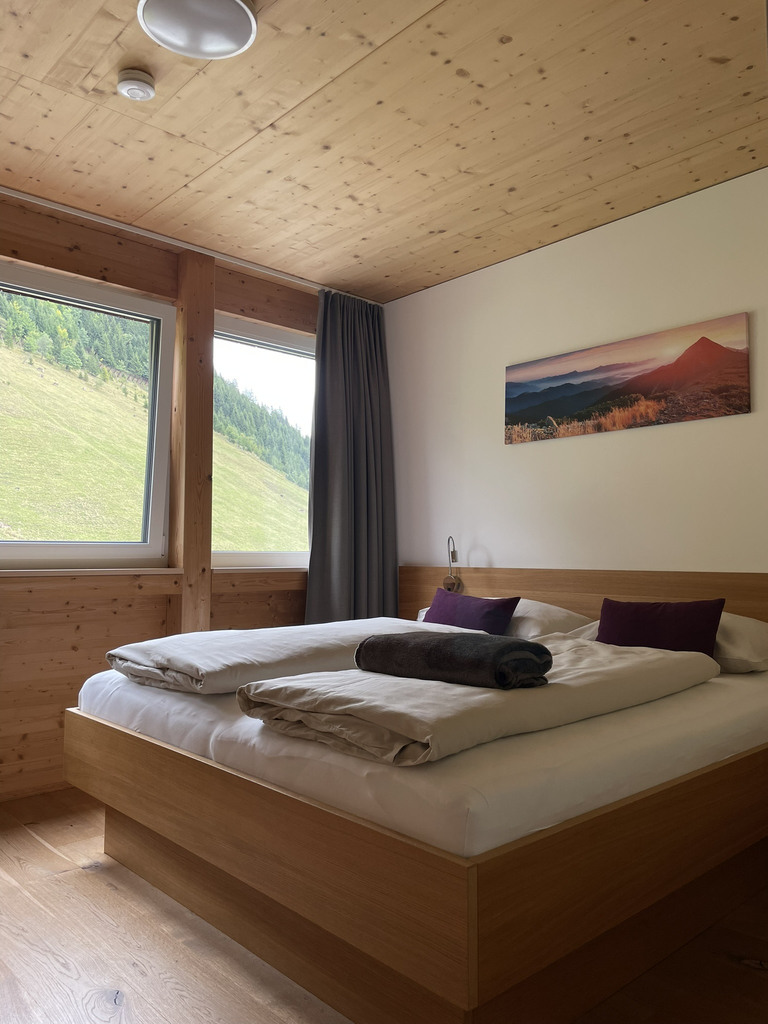
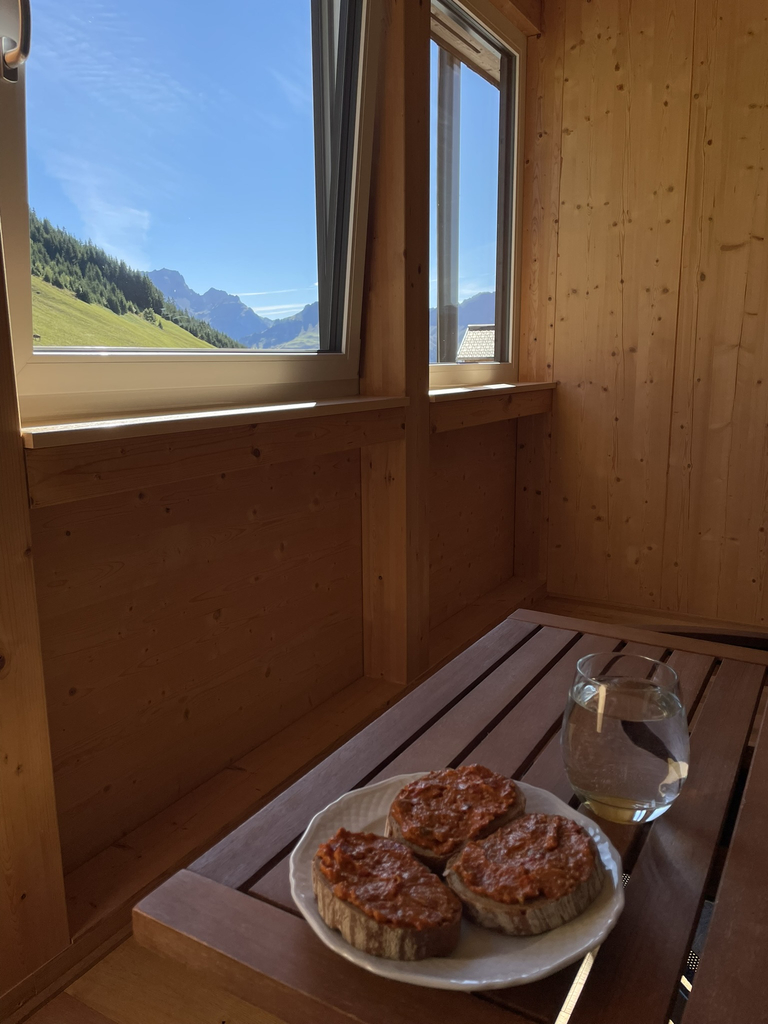
I had the pleasure of staying at Rössle Apartments. Its location is ideal for hiking, as you’re already halfway up the mountains around Faschina. In winter, this means you’re right next to the skiing slopes. If you need any gear, there is an outdoor shop downstairs next to the reception. The hotel itself consists of several apartments, which are great for families or anyone wanting access to a kitchen. For breakfast, you can order fresh bread from a nearby bakery, which will still be warm if you get up early. There is a bus stop right outside the hotel, and recycling facilities are really good. Another sustainable features are the lack of daily cleaning and 100% renewable energy. I had a great time staying in one of the apartments with its calm interior and views of the mountains.
Propstei St. Gerold
Propstei St. Gerold is a unique hotel in a repurposed monastery. Aside from sleeping here, you can do a wine tasting, guided tour through the grounds and a sensory mindfulness walk. Propstei St. Gerold is a social enterprise that has therapy horses, with which they help adults with mental health issues, as well as children with social problems. The spiritual purpose of the monastery is kept alive through both meditation sessions and religious services. When it comes to nature, the grounds contain a publicly accessible garden. More impressively, the monastery houses the largest colony of lesser horseshoe bats in all of Austria!
Hotel Gasthof Kreuz
Hotel Gasthof Kreuz is a family-owned hotel in Sonntag-Buchboden. A local bus connects the hotel to Sonntag, though the staff also offer pickups from nearby train stations when you arrive. For those arriving by car, there are chargers for electric cars. Other than that, the owners emphasise the locally sourced, regional food in the hotel restaurant. To prevent food waste, you can choose between different portion sizes. I find it cool that the entire family is involved in running the guesthouse: the parents and their 3 adult kids all have a role in the family busieness.
Food
I have to admit I was quite sceptical about finding vegan food in this region. But once again, Großes Walsertal proved itself as a sustainable destination with a good plant-based offer! First of all, several villages have a small ADEG supermarket that stocks soy yoghurt, vegetable spreads and other staples such as vegan pesto. Several restaurants have at least one vegan starter and main on the menu, which exceeded my expectations. I had some really good meals while looking out over a panoramic views, so make sure to visit some (hotel) restaurants for a tasty lunch or dinner.
Aside from meals, you can buy lots of local produce. I already mentioned the organic cookies and Bergtee, but that’s not all. Cheese-lovers will have a great time, too. Small-scale farms dotted around produce their own grass-fed cheese. The shop at Biospärenpark.haus also sells liquers, soft drinks, biscuits and more. I got myself some nettle salt and herbal tea as souvenirs.
Alpenresort Walsertal
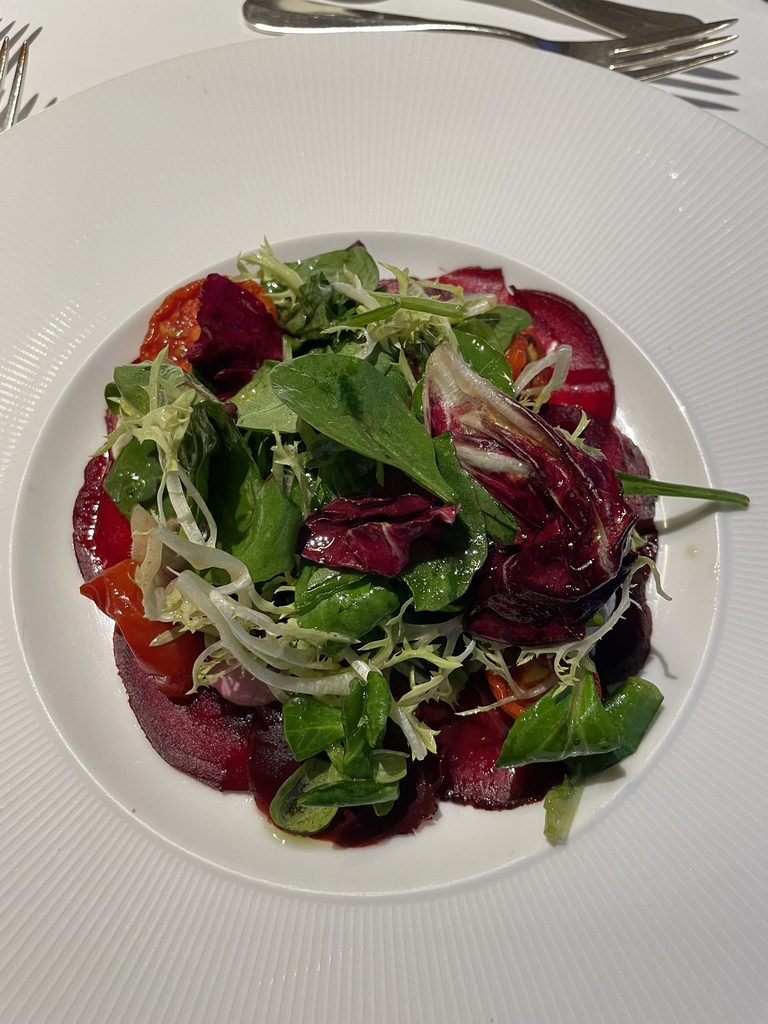
For a fancy dinner with outstanding service, I headed to Alpenresort Walsertal. The vegan options on the menu are a beetroot salad as a starter and a vegetable curry as a main dish. The salad has just a few ingredients, but you can taste the high-quality, flavourful ingredients. I found both the starter and the main to taste super fresh and healthy. The staff clearly know what veganism is, and the manager is happy to promote their vegan options more.
This is not a place where you walk in with your hiking boots still on, but I enjoyed dressing up a little and having a nice evening out. The atmosphere in the restaurant is formal yet cozy, so I imagine it is also nice on a cold winter evening after a day on the slopes. Especially when you sit next to the window, you get a good view of the Zafernhorn mountain. If, like me, you’re not staying at Alpenresort Walsertal, you can still have a meal here, which I would certainly recommend.
Gasthaus Falva
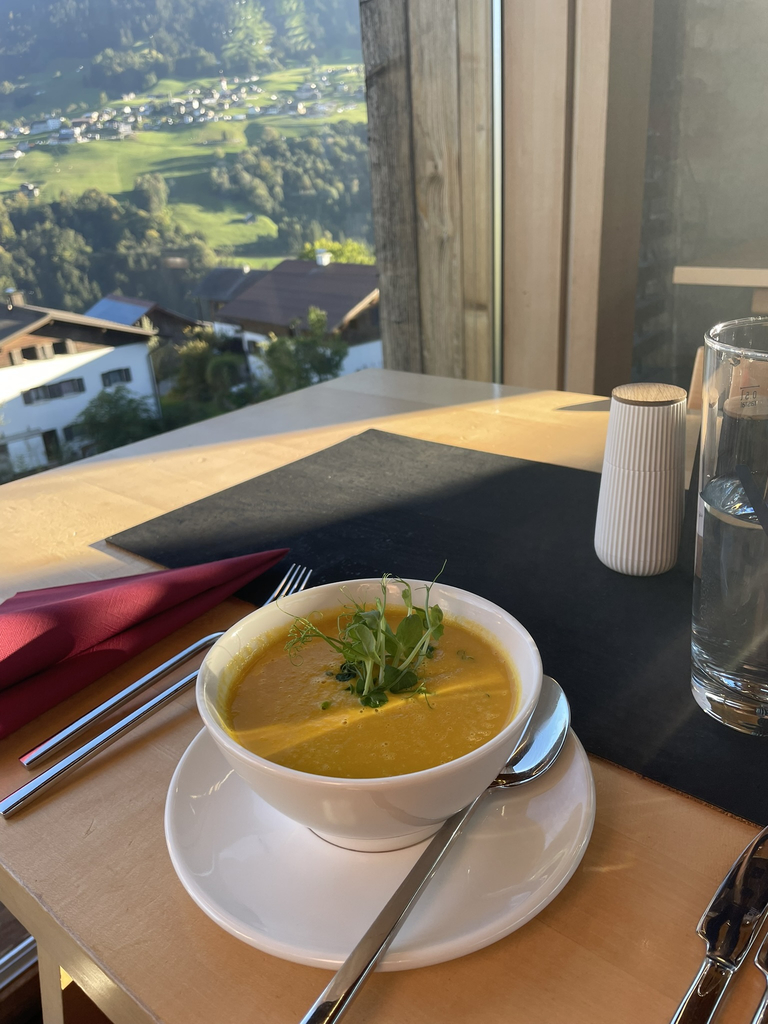
All restaurants on this list boast a panoramic view, but in my opinion the one at Gasthaus Falva is best! You look out over the valley, with Raggal in the distance. There is also outdoor seating when the weather allows it.
Because I love carrots, I was delighted to have a carrot soup as a starter. The addition of ginger gave it a nice extra tang, so I was happy before I even got to the main. The vegan options are labelled, so reading the menu is straightforward. One of the salads can be adapted to be vegan, so I had a few options to choose from. The main I opted for consisted of lentil patties in tomato ragout. It was quite filling, and I appreciated the protein of the lentils after a day full of exercise.
The building with its wooden panels and large windows is also worth mentioning. Gasthaus Falva looks very stylish, in other words. It is located in the centre of Blons opposite a village shop.
Lari Fari
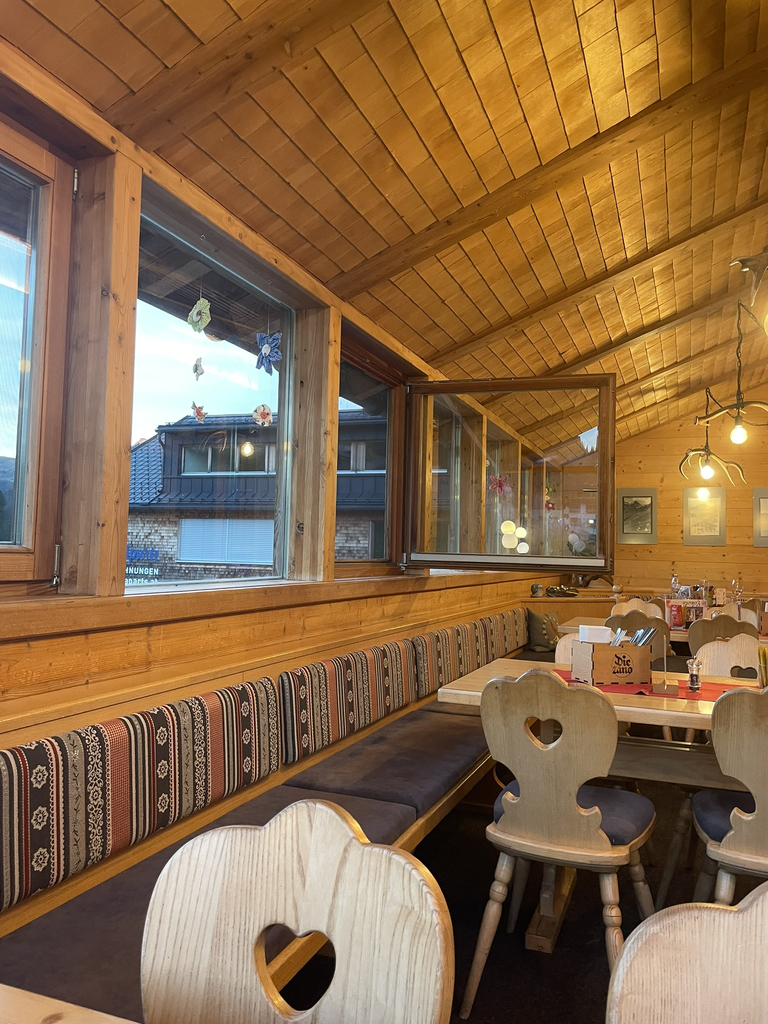
I would describe Lari Fari as an informal diner with a traditional-looking interior. There is a large terrace outside which is open during both the summer and winter season. Inside, you can either sit directly at the bar or head into the room from where you can look out over the ski slope with its lifts.
Lari Fari serves simple meals which could be classed as comfort food. This includes Austrian staples, but also pizza. For vegans, the vegetable curry is the most obvious option. It isn’t anything special, but tasty enough. If you have allergies, you’ll appreciate the clear indication of allergens for each dish. The menu also details the origin of a lot of the ingredients. Most of the ingredients are produced either in Großes Walsertal or elsewhere in Austria.
Gasthof Krone
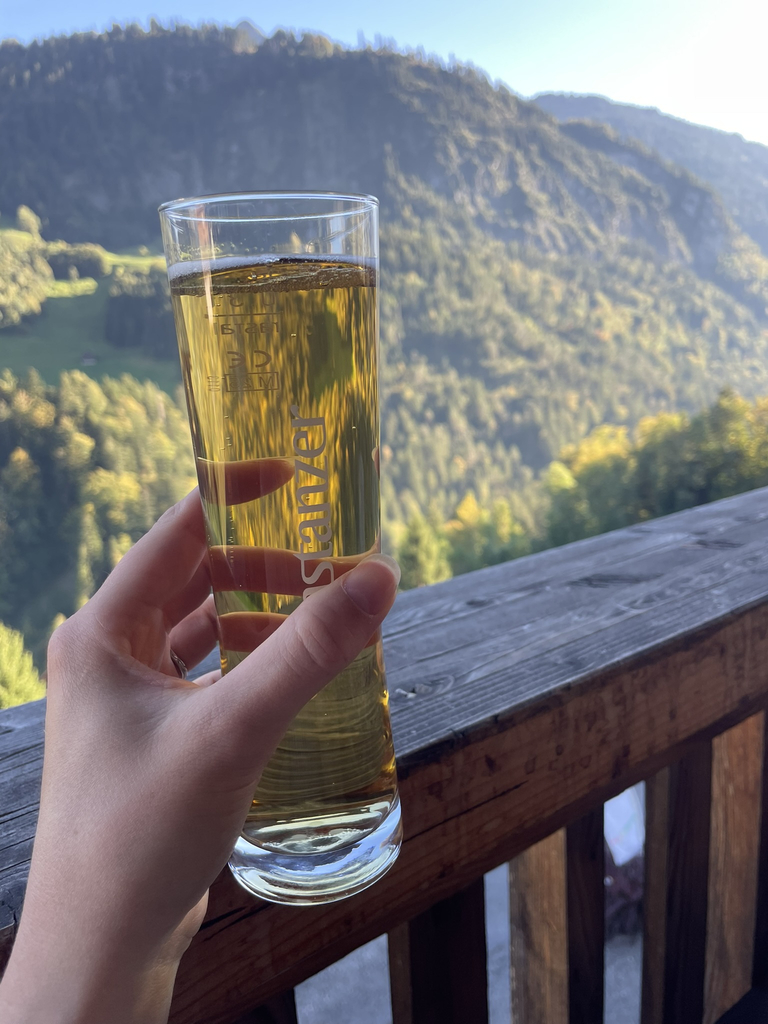
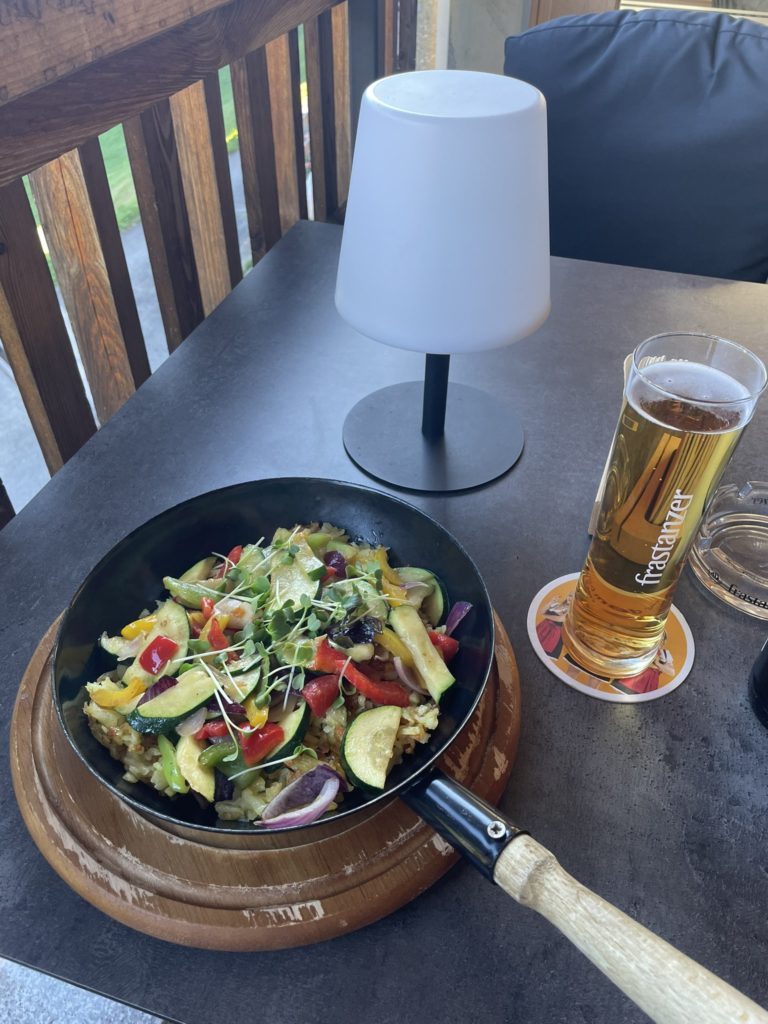
If you’re up for more spectacular dinner views, I suggest finding a table on the balcony of Gasthof Krone. You look out over Sonntag and the mountains on the other side of the valley. Especially when you’re there during sunset, the mountain tops change colour to various shades of pink, orange and purple.
Although there are no vegan options on the menu, the chef is happy to put something together for you if you phone them in advance. Of course there are fries and salad you can order, but I much preferred the rösti with fried vegetables that I got. The dish was served straight from the hob in a cast iron pan. The portion size was perfect, so I was went back to my accommodation with a full belly.
Daytrips
Bludenz
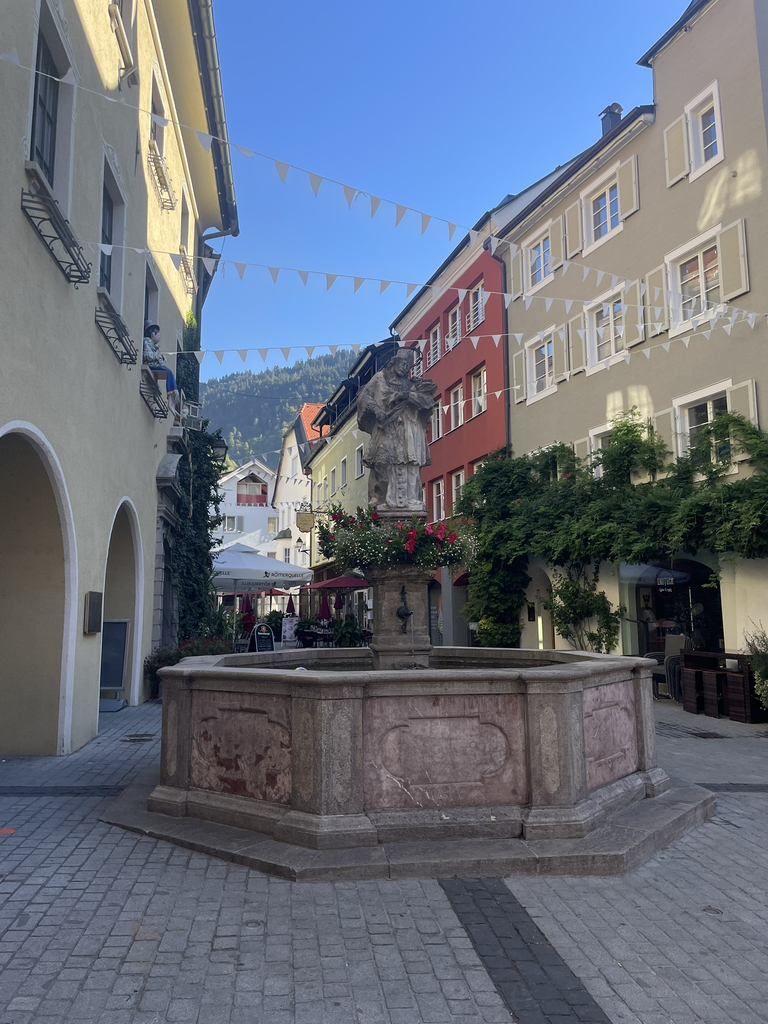
On my way back home, I stopped in Bludenz and Feldkirch for a few hours. Both are picturesque medieval market towns. In Bludenz, I walked up to the St. Laurentiuskirche for a view across the town. This was part of a historic walk around the old town that takes up to an hour. On this route, you learn about the origin of the pretty pastel-coloured buildings and the history of Bludenz. If you’re paying attention, you will find old paintings on several buildings, as well as parts of the protective wall around the town centre.
Feldkirch
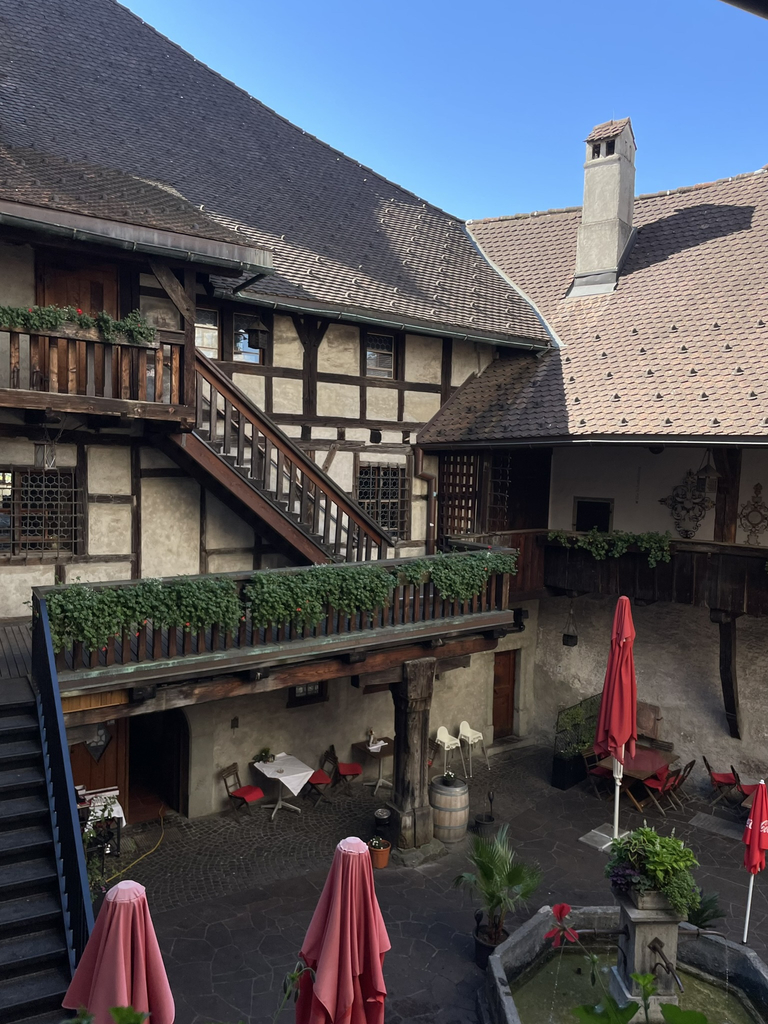
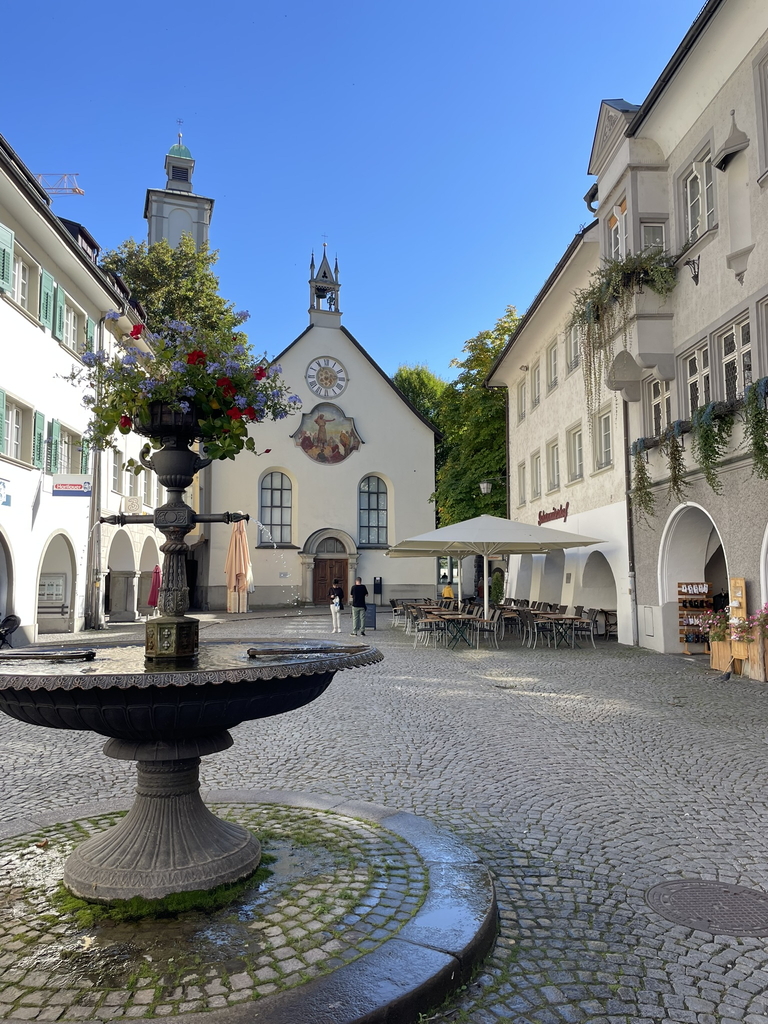
Feldkirch is bigger than Bludenz and has an excellent museum. The rooms are decorated with original furniture from houses across the city. A free audio guide tells you about the function of different rooms and the origin of the artifacts contained in them. Again, this is great for those interested in history. A walk around Feldkirch’s main sights lasts about 1 to 1,5 hours. However, you’re likely to need longer, as there are lots of small artisan shops to explore along the way. Before heading back to the train station, I had a late lunch in a park and wandered along the river for a little while.
Damüls
Just past Faschina in Großes Walsertal, you descend towards the next valley and the village of Damüls. This has lots of ski slopes and another ski lift that is open throughout summer. It takes you to the Sunnegg viewpoint: a perfect vantage point for seeing the alpine mountains spread out around you. From Sunnegg, you can do more hikes, for instance to Sünser See. If I had more time in the region, another activity I would have done would be the forest ropes course and zipline at Waldseilgarten Damüls. Because all buses running through Großes Walsertal terminate in Damüls, it is easy to extend your holiday there.
Conclusion
My stay in Großes Walsertal blew me away in every possible way! The hikes were even more scenic than I could have imagined (and more challenging due to the altitude, but I didn’t mind). The villages are well-connected with all the facilities I needed. And on top of all that, I am beyond impressed by how Großes Walsertal has transformed itself into a sustainable destination. The way people in the region live and think about the environment is inspiring: living off the land as much as possible, but taking care to never take too much. By extension, this now applies to tourism as well. Sustainability-minded travellers are invited to enjoy the nature, outdoor activities, regional food and calmness in Großes Walsertal. Personally, I can’t wait to come back to the region, as it has left a deep and hopeful impression that tourism definitely can be a force for good.
This blog is based on a sponsored press trip to Großes Walsertal, for which I’m very grateful. Everything in this blog reflects my honest opinions and experiences. I only collaborate with regions and tourism boards that I support, consider sustainable, and would visit anyway.